History and architecture

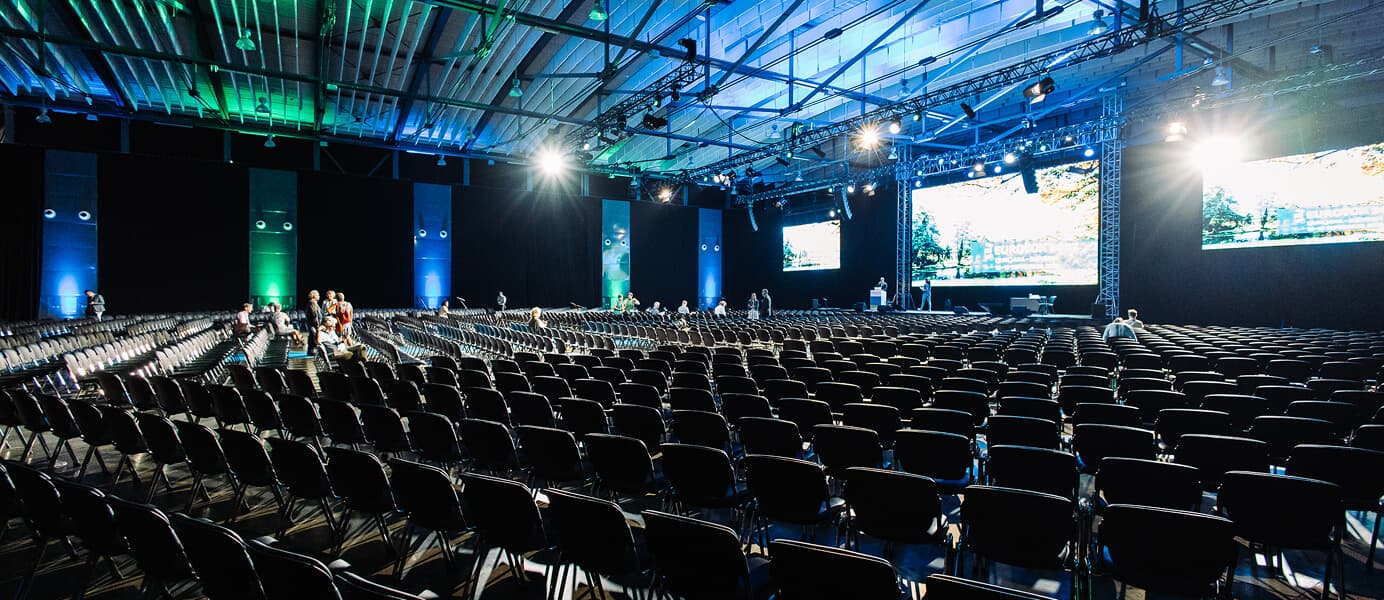
Rather than an architectural relic, the GR Ljubljana remains a vibrant space where the built environment serves as a dynamic backdrop for innovation and events.

The beginnings of Slovenia's largest convention center

The GR Ljubljana was established on 20 March 1954, at the initiative of the Slovenian corporate sector and the Slovenian Chamber of Commerce as a professional organization for staging fairs and exhibitions. Today, it stands as the oldest event center built after the Second World War and the largest venue of its kind in Slovenia.

The beginnings of Slovenia's largest convention center

First fairs and international influence

Just three months after its inception, the new venue on what is now Dunajska Road hosted the International Exhibition of Wood Processing and Use, one of the first major post-war trade fairs in Slovenia. That same year, Ljubljana also hosted the first Yugoslav Wine Fair, the predecessor to the world’s oldest wine competition, the Vino Ljubljana International Wine Competition.

The Vino Ljubljana International Wine Competition ranked among the ten most elite wine competitions in the world.

First fairs and international influence

Slovenia’s first public television broadcast

Although history books put the official birth of Slovenian public television in October 1958, its true beginnings took place right here at the GR Ljubljana. An improvised studio was set up within our halls, complete with sets, lighting, sound systems, and telecine equipment. This marked the first time a television program was successfully produced and broadcast in Slovenia.

It was at this very makeshift studio at the GR Ljubljana that the Avsenik Quintet performed their legendary song Na Golici for the first time on Slovenian public television in December 1957.

Slovenia’s first public television broadcast

GR Ljubljana television studio

From 4 to 16 August 1956, the GR Ljubljana hosted an international radio and telecommunications exhibition. Since television was the greatest technical innovation of the time, TV sets were placed in storefronts along the city's main streets and at the exhibition grounds, as there were only a few dozen private televisions in Ljubljana at the time. Visitors were able to watch a live television broadcast for the first time, with the legendary Frane Milčinski – Ježek being among the first prominent performers.

The following caption appeared on the screens: Radio Ljubljana – Television broadcast – GR Ljubljana television studio.

GR Ljubljana television studio

A turning point for congress activity

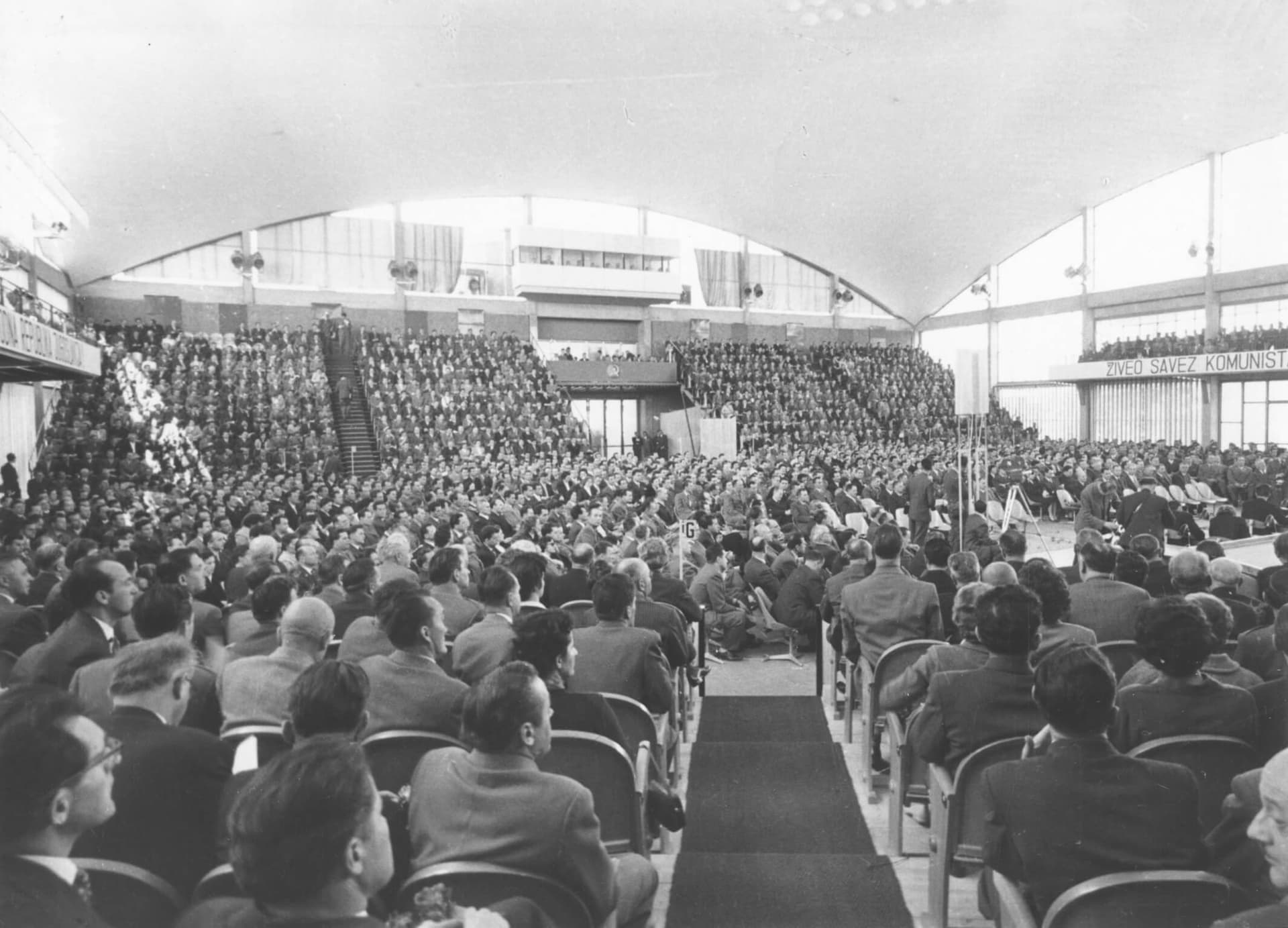
A major milestone in the development of the exhibition center was the 7th Congress of the League of Communists of Yugoslavia in April 1958, which firmly placed Ljubljana on the map as a premier venue for large-scale congresses.

This event paved the way for numerous international congresses and symposia in the years that followed, spanning science, technology, medicine, electronics, and culture.

A turning point for congress activity

Sports events

Until the construction of Tivoli Hall in 1964, the Kupola Hall was the primary venue for all major sporting events in Ljubljana. To accommodate these competitions, specialized facilities – including restrooms and showers for the athletes – were built on the hall's lower level.

Sports events

Ljubljana’s cultural hub

Our venue has played a vital role in the development of Slovenian culture. In 1964, it hosted the Slovenska Popevka music festival, where Marjana Deržaj won the audience award for the iconic song Poletna Noč (Summer Night). Over the decades, the venue has served as the setting for popular New Year's Eve celebrations, wine fairs, fashion shows, and exhibitions dedicated to electronics, flowers, greenery, and fungi. Later, it became the home of the Slovenian Automobile Show and numerous other major fairs.

It was on 1 April 1959 that the newly built Kupola Hall hosted its first high-profile concert, featuring the legendary Louis Armstrong. However, his plane landed late at Zagreb Airport, leaving the crowd of jazz enthusiasts waiting for over three hours. Despite the delay, the performance was nothing short of fantastic.

Ljubljana’s cultural hub

Global celebrities on our stages

Over the years, our halls have welcomed numerous fashion, film, sports, and music celebrities from around the world, including the model Naomi Campbell, the actors Ben Affleck and Kevin Costner, the politician Al Gore, and motorcycle champion Marc Márquez. Our stages have also hosted the Buena Vista Social Club and leading icons of the global electronic scene such as Ferry Corsten, Avicii, Calvin Harris, Tiësto, and Carl Cox.

Global celebrities on our stages

Timeless architecture

The GR Ljubljana stands as one of the most significant examples of post-war modernist architecture in Slovenia, a place where bold, contemporary architectural visions were realized through the use of innovative technologies and materials. The complex was designed as a functional and technologically advanced exhibition center, comparable to those in major European cities of the time. While it presented a formidable challenge for both architects and engineers when it was built, today it is a protected cultural heritage site and a cornerstone of Slovenian 20th century architecture.

Timeless architecture

Distinguished names in architecture

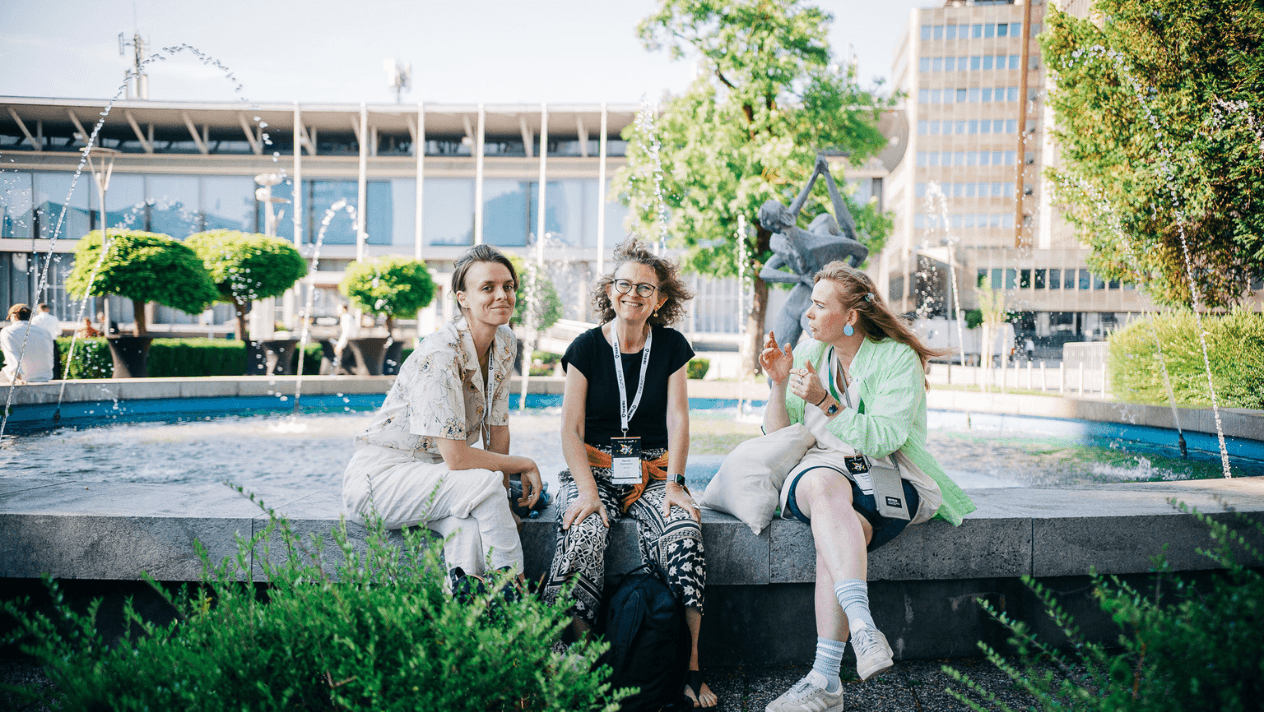
The venue's monumental buildings are the work of renowned Slovenian architects who shaped the post-war urban landscape of Ljubljana: Ilija Arnautović, Branko Simčič, Marko Šlajmer, and Milan Mihelič. While each hall has its own distinct character, together with the central courtyard and fountain they form a unique and cohesive whole. The first to be completed was the Kupola Hall in 1958, designed by architect Branko Simčič, with the remaining buildings gradually developed until 1987.

Distinguished names in architecture

Urška and the Water Man

A fountain and the rotating bronze sculpture Urška and the Water Man (Urška in Povodni Mož) were added to the plaza in 1957. It is the work of sculptor Stojan Batič, one of the most prominent Slovenian masters of 20th century public art. The sculpture is considered one of the first modern kinetic artworks in a public space in Slovenia. In tribute to the statue and the artist, two of our venues have been named the Urška Hall and the Povodni Mož Hall.

Urška and the Water Man

A modern evolution

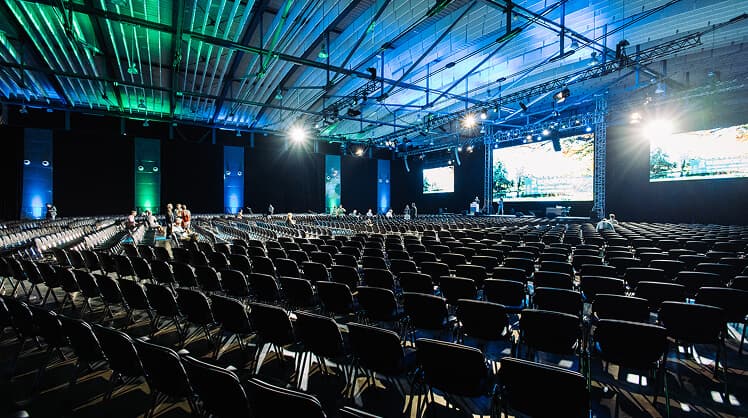
Renovations performed between 2005 and 2009 honored the site’s heritage by maintaining its original design logic. This modernization focused on integrating contemporary technical systems and improving visitor comfort, ensuring that the center meets the highest international standards of the 21st century

A modern evolution

Sustainability and responsibility

At GR Ljubljana, we are committed to sustainable business practices and environmental responsibility. In both the renovation and management of our venue, we implement energy-efficient systems, work to reduce our carbon footprint, and promote a circular economy through rigorous waste separation. We foster an inclusive working environment, ensure that the venue is accessible to everyone, and encourage sustainable mobility among our visitors. We build our sustainable vision in collaboration with event organizers and all stakeholders, convinced that only together can we create events that are socially responsible and environmentally friendly.

Sustainability and responsibility

Our team, our vision

GR Ljubljana is built by people who believe in the power of collaboration, reliable support, and professional execution. With expertise and dedication, our team ensures that every event runs seamlessly. As members of international associations, we remain at the forefront of industry developments and consistently follow global best practices.

Our team, our vision

Planning an event?

Contact us to receive a customized proposal tailored to your needs.

Subscribe to the GR Ljubljana newsletter

Keep up to date with the latest events at the GR Ljubljana.